THE HUDSON VALLEY PART ONE
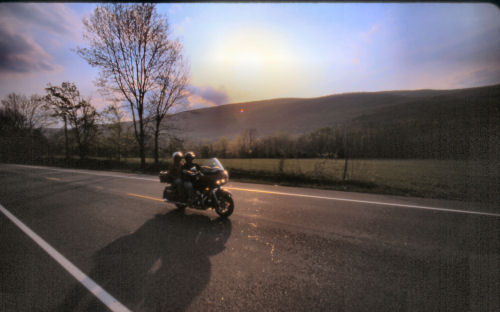
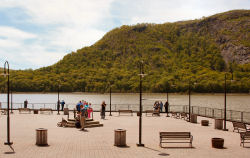
I took a break from a ride in the shadow of Anthony's Nose, at the Hudson River overlook on route 202/6 where I met another rider who stopped by. A Scotsman he was an talk turned to my desire to someday ride highland roads. His next statement put those plans on hold and gave me pause to think.
"What do you want to go over there for when you've got some of the best riding roads right here", he said. He was talking about the New York's Hudson Valley
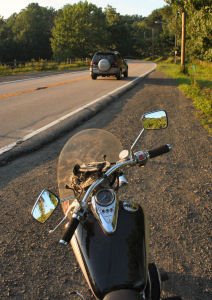
Three Hundred and ninety-seven years ago, Henry Hudson sailed his Half Moon north from the largest natural harbor along the estuary that would come to bear his name, the Hudson River.
In time it would become the prinicipal water artery connecting the Atlantic Ocean to Lake Erie via the Erie Canal; creating the River Towns that would form the backbone of settlement of what we now call the Hudson Valley. Today, the valley and those river towns provide some of the finest motorycle riding anywhere, a loop de loop through back roads and byways, a tour through American history. If the "Shot heard round the world" at Lexington and Concord signaled the birth of the baby that would become America, the Hudson Valley is where it learned to walk.
Extending north from New York Harbor, the valley has become a place rich in American history and folklore; home to a smorgasbord of of American industrialists, politicians, artists and dreamers, the famous and infamous, knaves and knights, who have lived in and loved its rolling hills and valleys.
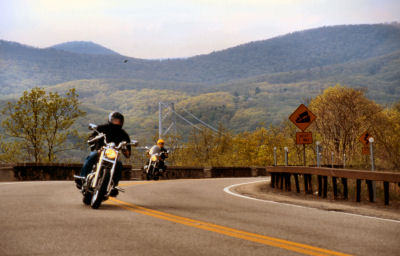
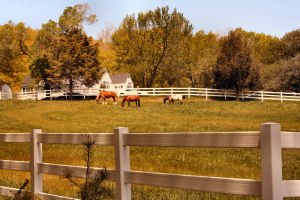
It is also a motorcyclists dream, so take a tour and sample those delights. The entire valley can probably be toured in one day, or bitten off in little bites and savored one piece at a time, on long sweepers, twisting and turning two lane blacktops, or quiet country lanes where you can smell the new mown grass and the morning dew as horses laze about their fields.
From the south, first stop at Tarrytown’s Sunnyside, the home of Washington Irving, America’s first author. Irving would create his most famous works here in the writing room overlooking the river surrounded by the idyllic grounds that fostered his imagination; American legends Rip Van Winkle, the mythical Sleepy Hollow, Ichabod Crane and the Headless Horseman.
The infamous chase took place along present day route nine, probably one of the oldest roads in America, extending from the tip of Manhattan Island (aka Broadway) north to Albany and then on to the Canadian border.
In his fertile imagination, Irving created the mythical village of Sleepy Hallow, a dark and foreboding area north of Tarrytown, then as now one of the first stops for travelers between New York and Albany and the entrance to the valley.
En route to the village that did not exist anywhere but in Irving’s imagination until 1995, stop at Patriot’s Park, where three rag-tag privates in the Continental Army stopped Major John Andre, beginning a series of events that would add an everlasting phrase to the American lexicon. He was carrying the plans of West Point, provided to him by the man whom Washington had entrusted its defense: Benedict Arnold.
Andre had walked through the little valley just north of town, past what is today Phillipsburg Manor, a still standing farm with its watermills and spacious grounds where you can sample the lifestyle of the landed gentry of the 17th century.
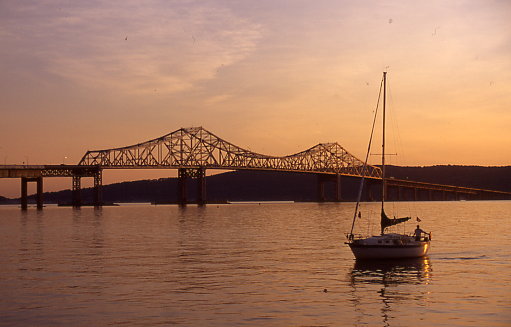
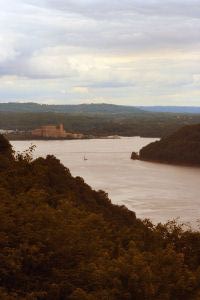
This is the widest part of the river, where the British fleet dropped anchor, preparatory to attacking West Point. Today however, you will only see pleasure boats, their billowing sails like a hundred white handkerchiefs floating on the breeze, their bows cutting the slate gray bay or resting serenely in the shadow of the Tappan Zee Bridge.
Route nine will carry you north, a generally busy two lane black top for much of the way, widening north of Fishkill, where it becomes a commercial hub, for a dozen or so miles, before returning to its earlier configuration.
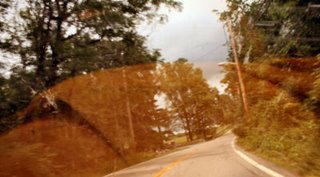
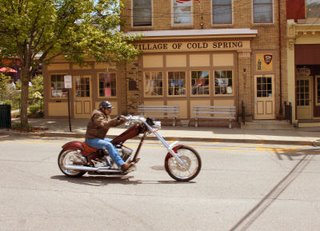
But to ride here and savor the valley, turn off onto the myriad two lane blacktops that meander spaghetti-like across the valley, capillaries that connect the main arteries that will whisk you through but show you little. You will pass through small villages where cornerstones were laid over two hundred years ago, where great men--and women--walked; where history was made. Cold Spring, one of the more appealing River Towns was, so the story goes, named by George Wahsington himself, when he stopped by and commented on the fresh clean water that came from the nearby springs. Those same springs would provide the power for the foundry that was buit here in 1817, where canon that helped to win the Civil War were manufactured.
Stop at Olana, where Frederick Church, one of the founders of the Hudson Valley School of art, built his Byzentine castle, furnished with treasured from his world wide travels.
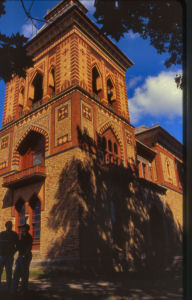
Or head down to Millbrook where Peter Wing and his wife Toni have spent their entire lives buildint the dream castle that Peter promised her when he asked her to marry him.
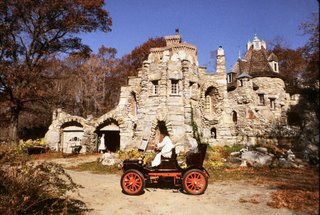

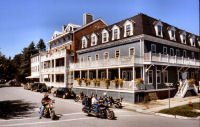
It was at the Beekman Inn in Rhinebeck is the oldest continually operating inn in America, and the entire history of the Hudson Valley passing through its doors. And yes, George Washington did indeed sleep here. While he planned the battle of Saratoga.
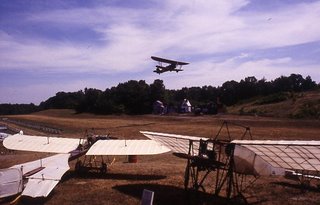
From here, head east to the Rhinebeck Aerodrome and Museum, where thin skinned canvas and wood flying machines carry on their ongoing weekend war, and the museum displays examples of men’s dreams that would someday put footprints on the moon. Here too, you can fly one of those oldies, and have a bird’s eye view of the majestic valley.
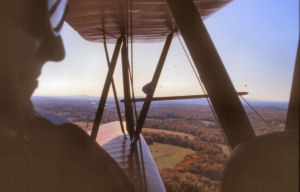
And from above, those estates you see just to the south are the palatial estates built by the Roosevelt’s, Rockefeller’s, and Vanderbilt’s, the American royalty; kings of commerce whose families—for better or worse—would build and guide the country that began here.
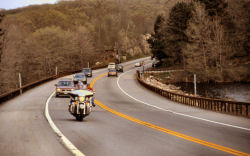
The Hudson valley is not a trip, it is an experience that cannot and should not be singular. It invites you back simply by being there, sharing its history, character and beauty. There is a lot of that, and more. But every valley has two sides, and next week we'll see the other side of the river.
posted by Warren D. Jorgensen @ 8:57 AM
1 comments